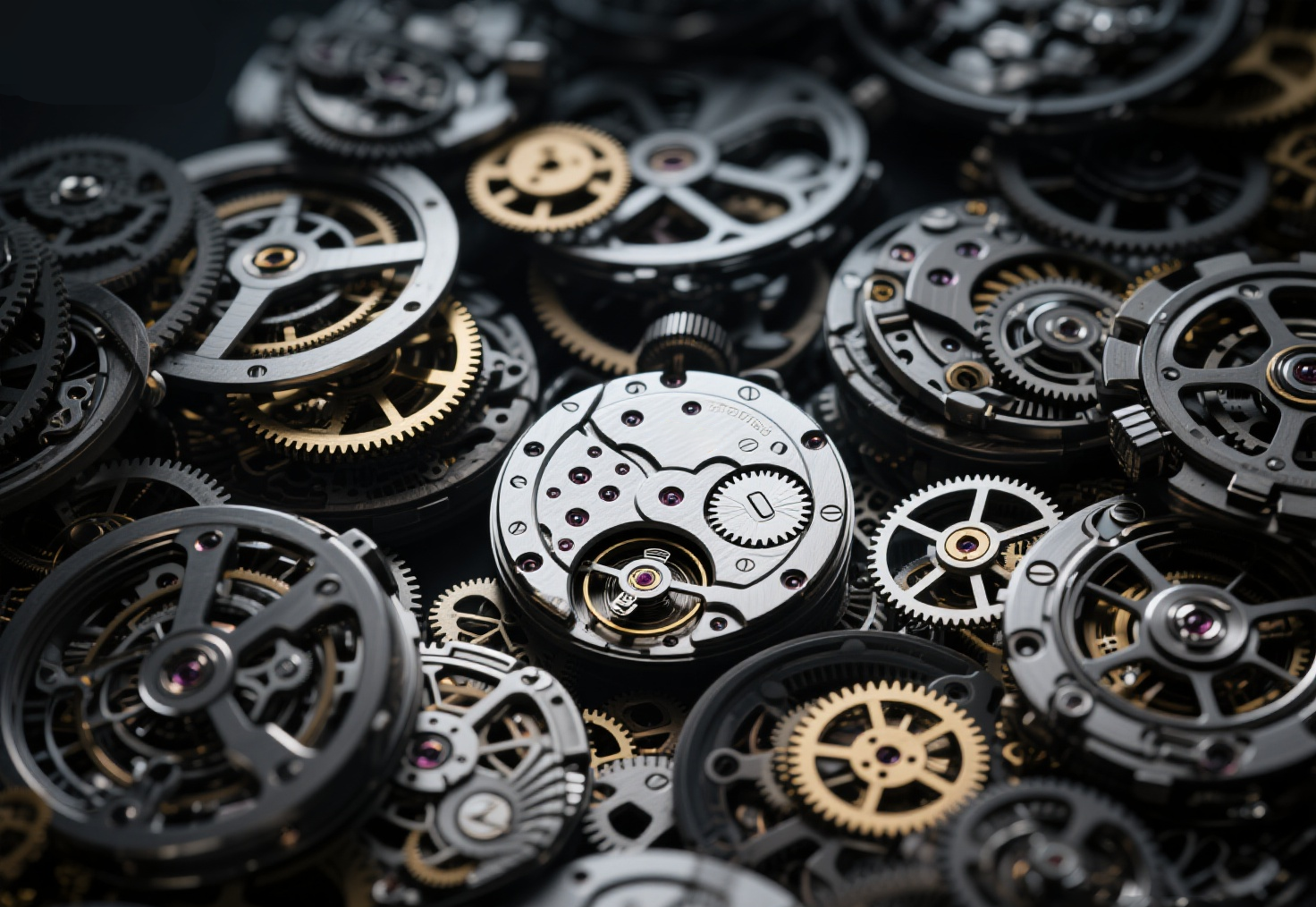
Introduction: The Heart of Your Timepiece
For anyone in the watch business, understanding the movement—the engine inside a watch—is crucial. It’s the single most important factor influencing price, performance, and customer satisfaction. This guide breaks down the world of watch movements into simple, actionable insights, comparing the major players: Switzerland, Japan, and China.
Part 1: The Big Three – A Regional Showdown
Think of watch movements like car engines. Each region has its own philosophy, targeting different market segments with distinct approaches to precision, innovation, and value.
1. Swiss Movements: The Premium Benchmark
The Analogy: The luxury German sedan. Built for exceptional performance, prestige, and refined engineering. It’s about heritage, craftsmanship, and a name that commands respect.
Core Characteristics:
Heritage & Prestige: Brands like ETA (owned by Swatch Group) and Sellita are industry legends. A “Swiss Made” label is a powerful marketing tool.
High Quality & Finishing: Known for excellent craftsmanship, durability, and beautiful decoration (like perlage or Geneva stripes), even on base-level movements.
Innovation: Home to high-end complications and advanced materials.
Pros:
Strong brand recognition and consumer trust.
Reliable, accurate, and built to last.
Excellent resale value and perceived quality.
Cons:
Highest cost.
Can be conservative in adopting new, cost-effective technologies.
Ideal For: Mid to high-end watch brands where brand image, heritage, and superior finishing are key selling points.
2. Japanese Movements: The Reliability Champions
The Analogy: The Japanese economy car. The global leader in efficiency, reliability, and value-for-money. They perfected mass-producing high-quality, accurate movements.
Core Characteristics:
Precision Engineering: Brands like Seiko (and its instruments division) and Citizen/Miyota are masters of automation and quality control.
Innovation in Value: Pioneered technologies like the Spring Drive (Seiko) and economical kinetic movements.
Robust & Practical: Designed to be workhorses—accurate, durable, and easy to service.
Pros:
Outstanding accuracy and reliability for the price.
Excellent cost-to-performance ratio.
Wide range of options, from basic to high-end.
Cons:
Finishing is often more utilitarian than decorative.
Lacks the perceived prestige of a Swiss caliber in the luxury segment.
Ideal For: The core of the market. Perfect for affordable, high-quality everyday watches, dive watches, and fashion brands that need reliable performance.
3. Chinese Movements: The Rising Value Players
The Analogy: The rapidly evolving Korean car brand. Once known for cheap copies, now producing genuinely good, original designs that offer incredible value.
Core Characteristics:
Rapid Improvement: Companies like Seagull (the world’s largest mechanical movement maker), Hangzhou, and Peacock have made huge strides in quality and originality.
Extreme Value: The most cost-effective way to get a mechanical watch.
Growing Capability: Now producing complex movements like tourbillons at a fraction of the Swiss price.
Pros:
Unbeatable low cost.
Enables the creation of very affordable mechanical watches.
Increasingly reliable in their base-level offerings.
Cons:
Quality control can be less consistent than Swiss or Japanese rivals.
Still carries a stigma of being “inferior” among some consumers, despite significant improvements.
Ideal For: Entry-level mechanical watches, micro-brands testing the market, and products where the lowest possible price point is the primary goal.
A Dress Watch where “The Look” Matters: The finer finishing of a Swiss movement adds perceived value when seen through a display caseback.
A High-Volume, Low-Cost Product: Chinese movements make the business case possible.
Part 2: Key Terms Demystified
1. Automatic (Self-Winding)
What it means: A mechanical movement that winds itself as the wearer moves their wrist. A rotating rotor spins and transfers energy to the mainspring.
Simple Explanation: “You power it by wearing it. If you take it off for a day or two, it will stop and need to be shaken or wound to start again.”
2. Hacking Seconds
What it means: A function where the second hand stops when you pull the crown out to set the time.
Simple Explanation: “It lets you synchronize your watch perfectly to the second with your phone or another clock.”
3. Power Reserve
What it means: How long a mechanical watch will run after being fully wound.
Simple Explanation: “Think of it like a fuel tank. A 40-hour power reserve means it will run for about 2 days after you take it off.”
4. Jewels (Jewel Bearings)
What it means: Synthetic rubies used at points of high friction inside a mechanical movement (e.g., the gear pivots) to reduce wear and increase longevity.
Simple Explanation: “They are not for decoration; they are functional, hard-wearing bearings that make the movement last longer. More jewels (within reason, e.g., 21-26) typically indicate a more complex movement.”
5. Chronometer
What it means: A particularly accurate mechanical movement that has passed a series of rigorous tests in an official institute (like COSC in Switzerland).
Simple Explanation: “It’s a ‘super-accurate’ certification for mechanical movements. It’s a premium feature that significantly increases the cost.”
Conclusion: Making an Informed Choice
There is no single “best” movement, only the best movement for your specific product and market.
Choose Swiss for prestige and top-tier finishing.
Choose Japanese for unbeatable reliability and value.
Choose Chinese for maximum cost-efficiency in mechanical watches.
By understanding these core principles, you can confidently select the right caliber for your timepieces and effectively communicate its value to your customers.
